The cheapest print quote is not always the least expensive option. The number that matters is the total cost of getting the right material, at the right quality, to the right place and ready when it is needed.
If a job has to be reprinted, manually sorted, urgently replaced or delivered twice, the original saving can disappear quickly. There can also be less obvious costs: staff time, wasted media spend, missed event opportunities and printed material that weakens rather than supports the brand.
This becomes particularly relevant in August, when many Australian organisations start preparing spring promotions, community events and end-of-year activity. A small production issue can become a much larger problem when campaign dates, venue bookings and distribution schedules are already fixed.
Cheap printing is not automatically poor printing
There are times when a straightforward, budget-focused print option is entirely suitable. An internal handout with a short working life does not need the same production specification as a presentation folder, retail display or event invitation.
The risk comes from choosing on price before confirming what the quote actually includes. Two products described as an A4 flyer, corflute sign or printed booklet may differ considerably in stock, colour management, finishing, packing, delivery and quality control.
A useful comparison therefore starts with the intended purpose. Ask how long the item must last, where it will be used, how it will be handled and what impression it needs to make.
Five ways a low quote can become expensive
1. Reprints caused by overlooked artwork issues
Incorrect dimensions, low-resolution images, missing bleed and poorly positioned folds can all affect the finished product. A file may look fine on screen while still being unsuitable for production.
If the supplier simply processes the supplied file without identifying an obvious concern, the problem may only become clear after the cartons arrive. The direct cost is a second print run. The indirect cost can include revising artwork, obtaining another approval, disposing of unusable stock and rearranging distribution.
Before ordering, clarify whether the file will receive a technical preflight check and whether a proof is included. A proof does not catch every possible production issue, but it gives the team a defined approval point.
2. Colour inconsistency across campaign items
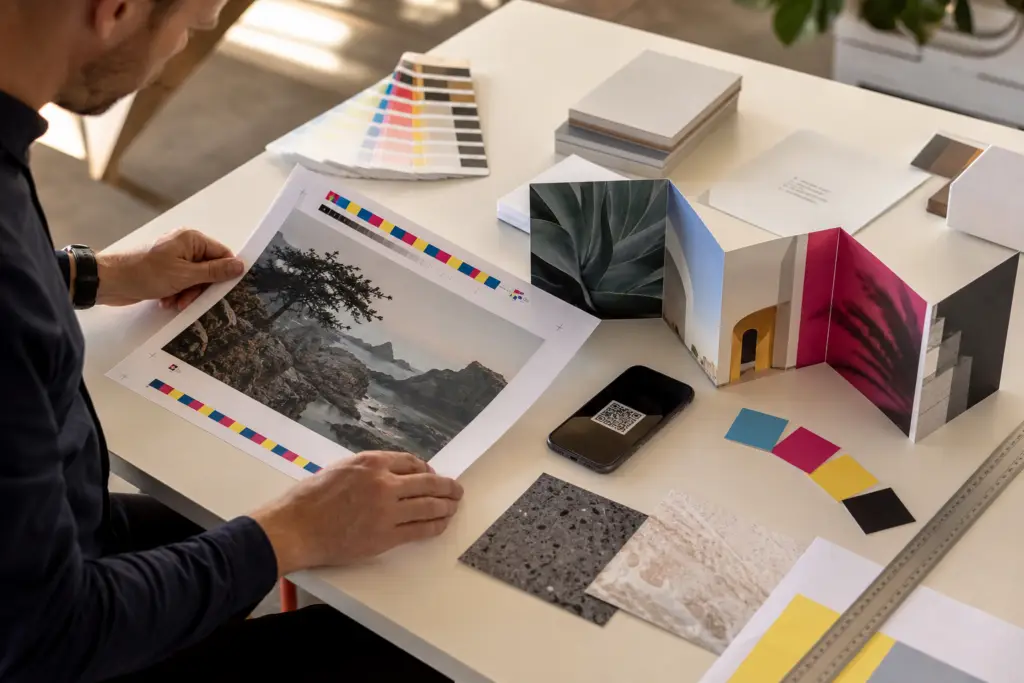
Colour can vary between screens, printing methods, materials and production runs. A brand colour printed on uncoated paper will not necessarily look identical on gloss stock, fabric, vinyl or a promotional product.
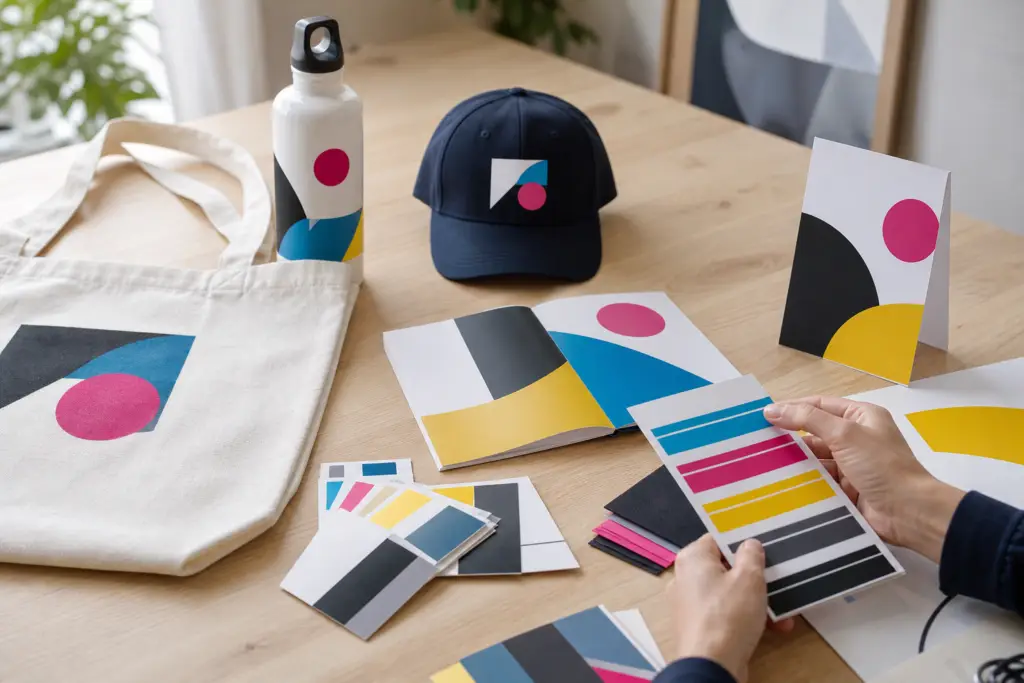
This matters when several items appear together. For example, a pull-up banner, brochure and tablecloth used at the same event need to feel like one campaign, even if exact colour matching across every material is not technically possible.
A low quote may not allow for colour references, physical samples or coordination between different production methods. If colour is important, provide the available brand specifications and identify which items will be viewed side by side. It is better to discuss realistic tolerances before production than debate colour after delivery.
3. Finishing that does not suit the job
Cutting, folding, binding, laminating and mounting affect how printed material works in practice. Poorly planned finishing can leave brochures cracking along folds, booklets that do not sit neatly, or signs that are difficult to install.
Finishing decisions should be based on use, not appearance alone. A menu that will be handled repeatedly has different requirements from a one-day information sheet. An outdoor sign needs a specification suited to its location and expected period of use, while an indoor display may have other priorities.
When comparing quotes, check whether finishing is described clearly. Terms such as “standard finish” are less useful than a specific explanation of what will be supplied.
4. Stock that looks right online but performs poorly
Paper weight is only one part of stock selection. Coated and uncoated papers reproduce colour differently. Some stocks are easier to write on, while others are selected for image detail, rigidity or a particular tactile quality.
Using the wrong stock can create practical problems. Appointment cards may be difficult to write on. A self-mailer may feel too light. A folded piece may become bulky or resist sitting flat. Packaging inserts may not fit as expected once stock thickness and folds are considered.
If the material has a functional requirement, mention it when requesting the quote. A physical sample or stock dummy can be more informative than choosing from a description on a screen.
5. Missed deadlines and emergency recovery costs
A delivery date is not the same as a dispatch date, and a production estimate may begin only after artwork approval. Confusion around these details is a common source of campaign stress.
If printing arrives after an event, promotion or scheduled mail-out, even a perfect product has limited value. Recovery may involve express freight, local reprinting, staff collecting goods or running the campaign without planned materials.
Work backwards from the date the items must be in hand, not the date they need to leave the printer. Include time for artwork changes, approval, production, finishing, freight and internal distribution. For multi-location orders, allow time to check quantities and delivery details for every destination.
How to compare quotes properly
A fair comparison requires the same specification to be sent to each supplier. Otherwise, the quotes may represent different products.
- Finished size and page count: Include whether page counts cover the front and back cover.
- Quantity: Confirm whether it is one total quantity or several versions.
- Stock: Specify type, weight and any required characteristics.
- Printing: Note whether the job is printed on one side or both sides and whether colour is required throughout.
- Finishing: List folds, binding, trimming, laminating, drilling, mounting or other requirements.
- Artwork support: Confirm whether files are supplied ready to print or need design and setup work.
- Proofing: Ask what type of proof is available and what it is intended to confirm.
- Packing and delivery: Include delivery locations, split quantities, labelling and any deadline that cannot move.
It is also worth asking what has not been included. Freight, individual packing, artwork corrections or specialised finishing can materially change the final invoice.
Match the quality decision to the business risk
Not every job needs premium stock or extensive proofing. The sensible approach is to spend attention where an error would have the greatest consequence.
A useful way to assess risk is to ask three questions:
- What happens if the colour, size or finish is not as expected?
- Can the deadline move if production or freight takes longer?
- Would replacement be simple, or would it affect an event, launch or national distribution?
For low-risk internal material, a basic specification may be enough. For customer-facing, time-sensitive or multi-part campaigns, planning, samples and coordinated production can be worth more than a small reduction in unit price.
Buy the outcome, not just the print run
The strongest print decision is not necessarily the premium option or the cheapest option. It is the option that fits the purpose, schedule and acceptable level of risk.
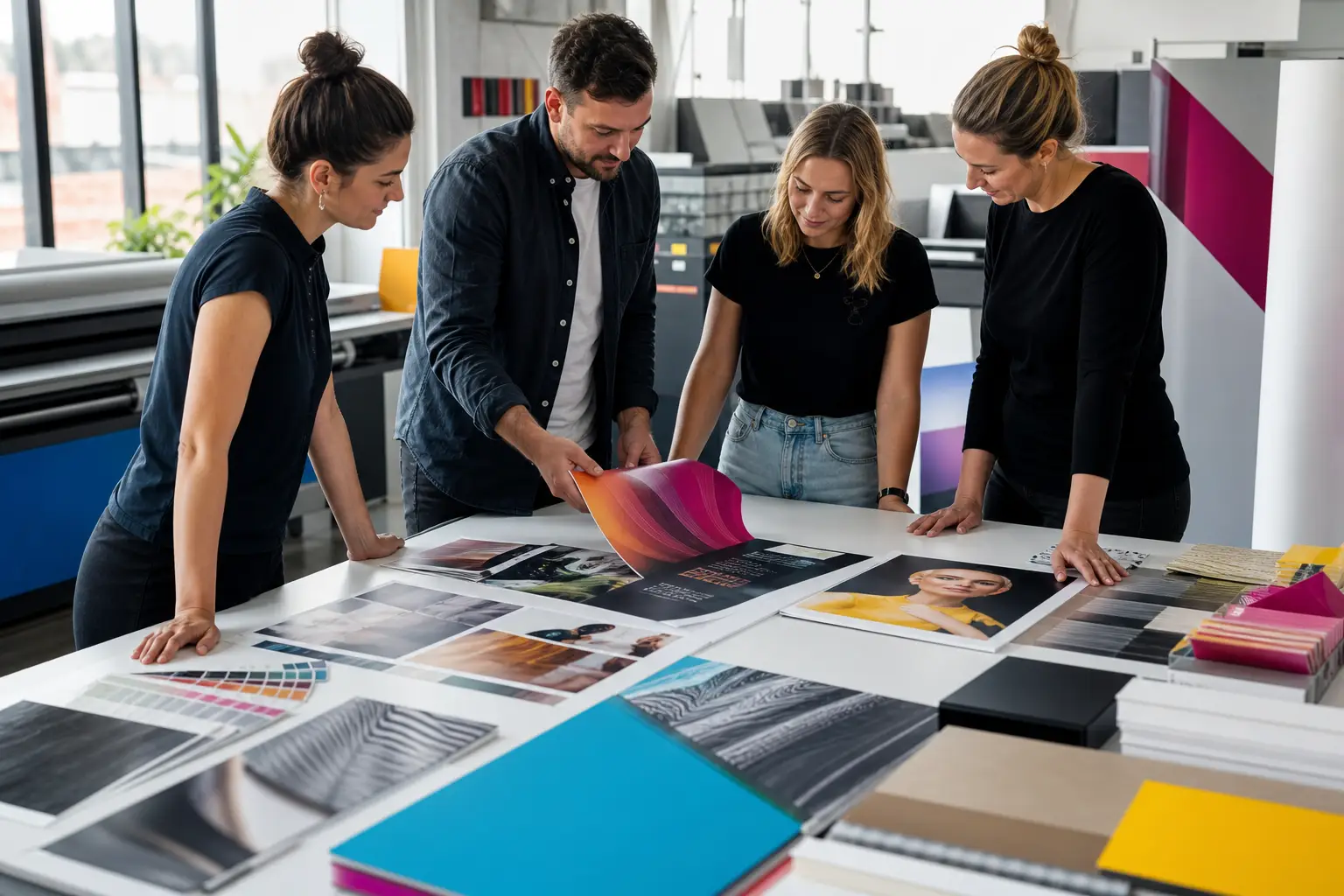
All Aces Printing supports Australian organisations from concept and design through production and delivery, with production capability in every state. That broader view can help identify practical issues before they become reprints, urgent freight or missed campaign dates.
Before approving the lowest quote, take a moment to calculate what failure would cost. A well-specified job may look slightly more expensive on paper, yet prove far better value once the whole campaign is considered.
Talk to the All Aces team about your next project Get in touch with us.